Homemade Butter
Author: Lu
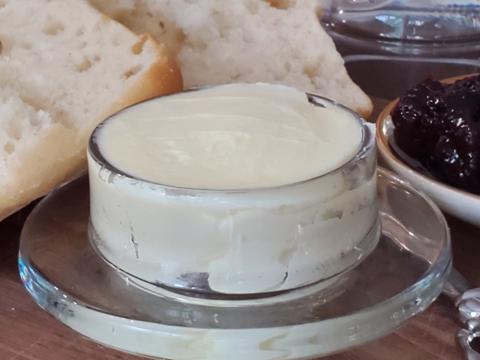
Homemade butter is a simple, traditional dairy product made by whipping heavy cream until the fat separates from the liquid. With just one ingredient, you can make fresh, creamy butter with a delicate flavor and a wonderfully smooth texture. The leftover liquid, known as buttermilk, can also be saved and used in pancakes, biscuits, bread, and other baked goods.
Ingredients:
| • heavy whipping cream (36% fat) | 500 ml, cold |
| • fine salt (optional) | 1/4 teaspoon |
WHIPPING THE CREAM
1. Pour the cold heavy cream into a large mixing bowl or the bowl of a stand mixer fitted with a whisk attachment. Make sure the bowl is large enough to accommodate splashing as the cream thickens.
2. Begin whipping the cream on medium speed. First, it will become soft and fluffy, then develop stiff peaks, just as when making whipped cream.
3. Continue whipping beyond the whipped cream stage. The mixture will gradually become grainy, and small yellowish butter clumps will begin to separate from the liquid.
4. Keep mixing until the butterfat has completely separated from the liquid. You should see distinct yellow butter solids and a pale, milky liquid. This liquid is fresh buttermilk.
SEPARATING THE BUTTER
5. Stop the mixer and pour the buttermilk through a fine-mesh strainer into a separate bowl. Reserve the buttermilk for another use, if desired.
6. Gather the butter solids and gently press them together with a spatula or clean hands to remove as much remaining liquid as possible.
WASHING THE BUTTER
7. Transfer the butter to a bowl of very cold water. Gently knead and press it with your hands or a spatula to release any remaining buttermilk. The water will become cloudy.
8. Drain the cloudy water and replace it with fresh cold water. Repeat the washing process until the water remains almost completely clear. This step is important because leftover buttermilk can cause homemade butter to spoil more quickly.
9. Once thoroughly washed, press the butter firmly to remove as much water as possible. If desired, add the salt and knead until evenly distributed.
SHAPING AND STORING
10. Shape the butter into a log, block, or small portions. Wrap it tightly in parchment paper or place it in an airtight container.
11. Refrigerate until firm before serving. Homemade butter can also be frozen for longer storage.
Keep homemade butter refrigerated and use it within approximately 5–7 days for the best quality. Always use clean utensils when handling it.
SERVING IDEAS:
- Spread freshly made butter over warm homemade bread, toast, or freshly baked rolls.
- Serve with warm biscuits, cornbread, or pancakes.
- Use it to finish grilled vegetables, roasted potatoes, or freshly cooked pasta.
- Make garlic and herb butter to serve with steak, seafood, or crusty bread.
TIPS & VARIATIONS:
- Use heavy whipping cream with at least 36% milk fat. Higher-fat cream generally produces a richer butter and a better yield.
- Cold cream works well for the initial whipping process. If the butter takes too long to separate, let the cream warm slightly at room temperature before continuing.
- A stand mixer makes the process easier, but a hand mixer or food processor can also be used.
- Do not stop when the cream becomes whipped cream. Continue mixing until the yellow butter solids separate completely from the buttermilk.
- Wash the butter thoroughly with very cold water. Removing the remaining buttermilk helps improve its keeping quality.
- For salted butter, add fine salt gradually, tasting as you go. Adjust the amount according to your preference.
- For a richer flavor, use high-quality pasteurized heavy cream. Avoid ultra-pasteurized cream, if possible, as it may behave differently during whipping.
- Save the fresh buttermilk. It is excellent for pancakes, waffles, biscuits, quick breads, and marinades.
- For compound butter, mix softened homemade butter with fresh herbs, garlic, lemon zest, honey, or spices.
- Freeze butter in small portions so you can use only what you need.
FUN FACTS:
Before refrigerators existed, butter was sometimes preserved by burying it in peat bogs! Archaeologists in Ireland have discovered enormous lumps of ancient butter, some estimated to be over 2,000 years old. Known as bog butter, it was buried in wooden containers, barrels, or wrapped in animal skins. The cool, acidic, oxygen-poor conditions of the bog helped preserve it. Some discoveries are so well preserved that they still look surprisingly like butter today — although nobody is rushing to spread 2,000-year-old butter on their toast!

