Cabbage Rolls (Golubtsy)
Source/Author: Mary
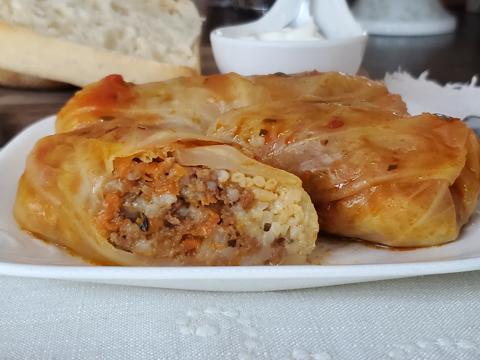
The name Golubtsy comes from the Slavic word for "little doves." Although no one is completely certain why, many believe the neatly rolled cabbage leaves reminded people of small resting birds, making the dish a symbol of home cooking and family gatherings throughout Eastern Europe.
Ingredients:
| • rice | 1 cup |
| • salt | to taste |
| • vegetable oil | for frying |
| • ground black pepper | to taste |
| • carrot | 1 large |
| • onions | 2 |
| • white cabbage | 1 large head |
| • italian seasoning | to taste |
| • bay leaves | 2 |
| • ground meat | 500 g |
| • tomato basil pasta sauce | 1 jar (24 ounces) |
1. Fill a large pot about three-quarters full with water and bring it to a boil.
2. Remove any damaged outer leaves from the cabbage.
3.. Using a small knife, carefully cut around the core to loosen it without removing too much of the cabbage.
4. Carefully lower the whole cabbage into the boiling water with the core facing down. (I like to use 2 large forks for it)
5. Cover the pot and cook for about 3–5 minutes.
6. Using tongs, gently peel away the softened outer leaves as they become flexible. Return the cabbage to the water as needed until enough leaves have been removed.
7. Place the cabbage leaves on a plate to cool.
8. Trim the thick rib at the base of each leaf with a knife, being careful not to cut through the leaf. This makes rolling much easier.
9. Cook the rice according to the package directions until just tender. Drain well and allow it to cool slightly.
10. Peel and finely chop the onions.
11. Peel and grate the carrot using the large holes of a box grater.
12. Heat 2–3 tablespoons of vegetable oil in a large skillet over medium heat. Add the onions and cook for about 5 minutes, stirring occasionally.
13. Add the carrot and continue cooking for another 5 minutes, stirring occasionally, until the vegetables have softened.
14. Remove the skillet from the heat and allow the vegetables to cool slightly.
15. In a large bowl, combine the cooked rice, ground meat, and sautéed vegetables. Season with salt, black pepper, and Italian seasoning. Mix gently until everything is evenly combined.
16. Place one cabbage leaf on a work surface with the stem end facing you.
17. Place about 2–3 tablespoons of filling near the base of the leaf.
18. Fold the sides of the leaf inward over the filling. Roll the leaf tightly from the stem end toward the tip to completely enclose the filling.
19. Repeat with the remaining cabbage leaves and filling.
20. Line the bottom of a large pot or Dutch oven with any leftover cabbage leaves. This helps prevent the cabbage rolls from sticking or scorching.
21. Arrange the cabbage rolls seam-side down in snug layers.
22. Place the bay leaves between the layers.
23. Pour the tomato basil sauce evenly over the cabbage rolls. Add enough water to just barely cover the cabbage rolls if needed.
24. Place a heatproof plate or shallow bowl upside down directly on top of the cabbage rolls to keep them submerged during cooking.
25. Cover the pot with a lid.
26. Bring the sauce to a gentle boil over medium heat.
27. Reduce the heat to low and simmer gently for about 1 hour.
28. Carefully remove the plate and bay leaves before serving.
TIPS & VARIATIONS:
- A mixture of ground beef and pork produces especially tender and flavorful cabbage rolls.
- Savoy cabbage can be used instead of white cabbage. Its leaves are naturally more tender and easier to roll.
- If some cabbage leaves tear, simply overlap two smaller pieces to form one larger wrapper.
- Any remaining cabbage can be chopped and added around the rolls while they cook.
- The uncooked cabbage rolls freeze beautifully. Arrange them in freezer-safe containers before adding the sauce. Thaw overnight in the refrigerator before cooking.
- Cooked cabbage rolls often taste even better the next day after the flavors have had time to develop.
SERVING IDEAS:
Serve with sour cream and fresh dill.
Pair with mashed potatoes or crusty bread.
Sprinkle with fresh parsley or dill just before serving.
Enjoy with rye bread for a traditional Eastern European meal.