White Sandwich Bread
Author: Lu
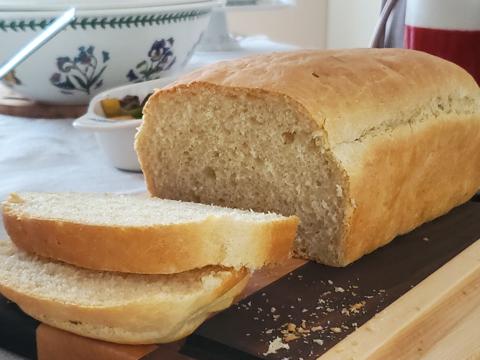
This soft and tender white sandwich bread has a delicate crumb, a lightly golden crust, and just enough richness from butter and milk. The dough can be kneaded by hand or with a stand mixer, making this a reliable everyday bread for sandwiches, toast, French toast, or simply eating warm with butter.
Ingredients:
| • salt | 1 teaspoon |
| • water | 120 ml |
| • butter | 60 g, softened |
| • All-purpose flour | 3 cups (375 grams) |
| • milk | 150 ml |
| • granulated sugar | 2 tablespoons |
| • instant yeast | 2 teaspoons |
1. Remove the butter from the refrigerator ahead of time and allow it to soften to room temperature. It should be soft enough to press easily with a finger but not melted.
2. Combine the milk and water in a small saucepan or microwave-safe container. Warm the mixture to about 100°F (38°C). It should feel warm but not hot. Pour the warm milk mixture into a small bowl. Add the instant yeast and stir with a spoon. Cover the bowl with plastic wrap and let stand for 10–15 minutes.
3. In a large mixing bowl, whisk together the flour and sugar.
4. Add the yeast mixture to the flour. Mix until a shaggy dough forms.
5. Add the salt and softened butter.
6. Knead the dough using one of the following methods.
HAND KNEADING:
Transfer the dough to a lightly floured work surface. Knead for about 10–12 minutes, stretching and folding the dough until it becomes smooth and elastic.
The dough should feel soft and slightly tacky but should not stick heavily to your hands. Avoid adding too much flour, as this can make the bread dense.
STAND MIXER:
Fit the mixer with the dough hook. Mix on low speed for about 2 minutes, until the ingredients are incorporated.
Increase to medium-low speed and knead for about 7–9 minutes.
7. The dough is ready when it becomes smooth and elastic and begins to pull away from the sides of the bowl. Test the dough by gently stretching a small piece between your fingers. It should stretch into a thin membrane without tearing immediately.
8. Shape the dough into a ball. Place it in a lightly greased bowl. Cover the bowl with plastic wrap.
9. Place the dough in a warm, draft-free place and let it rise for about 40–60 minutes, or until it has doubled in size.
10. Lightly grease a standard 9 × 5-inch (23 × 13-centimeter) loaf pan.
11. Gently press the dough to release the largest air bubbles.
12. Shape the dough into a loaf by flattening it into a rectangle, folding the sides toward the center, and then rolling it tightly from one short end to the other.
13. Place the shaped dough seam-side down in the prepared loaf pan. Cover loosely with plastic wrap. Let the dough rise again in a warm place for about 30–45 minutes, or until it has risen to about 1 inch (2–3 centimeters) above the rim of the pan.
14. Preheat the oven to 350°F (175°C).
15. Bake the bread for about 30–35 minutes, until the top is evenly golden brown.
16. The bread should sound hollow when tapped on the bottom, or the center should reach approximately 190–195°F (88–91°C) if checked with an instant-read thermometer.
17. Remove the bread from the pan and place it on a wire rack. Allow it to cool for at least 1 hour before slicing. Cutting it while very hot can compress the soft crumb.
18. Slice and serve.
SERVING IDEAS:
Use for sandwiches and grilled cheese.
Toast and serve with butter and jam.
Make French toast.
Serve with eggs for breakfast.
Use for tea sandwiches and small party sandwiches.
Serve warm with homemade butter, honey, or fruit preserves.
TIPS & VARIATIONS:
The dough should be soft and slightly tacky, not stiff. Resist the temptation to add lots of flour during kneading.
For an especially soft crust, brush the hot loaf with a little melted butter immediately after removing it from the oven.
For evenly shaped slices, allow the bread to cool completely before slicing.
The bread keeps well for 2–3 days in an airtight bag or container.
For longer storage, slice the cooled loaf and freeze the slices in a freezer-safe bag. Individual slices can be toasted directly from frozen.
For a slightly richer sandwich bread, replace part of the water with additional milk.
For a golden, glossy crust, brush the top lightly with milk before baking.